West Valley Emerging as Southwest Logistics Hub
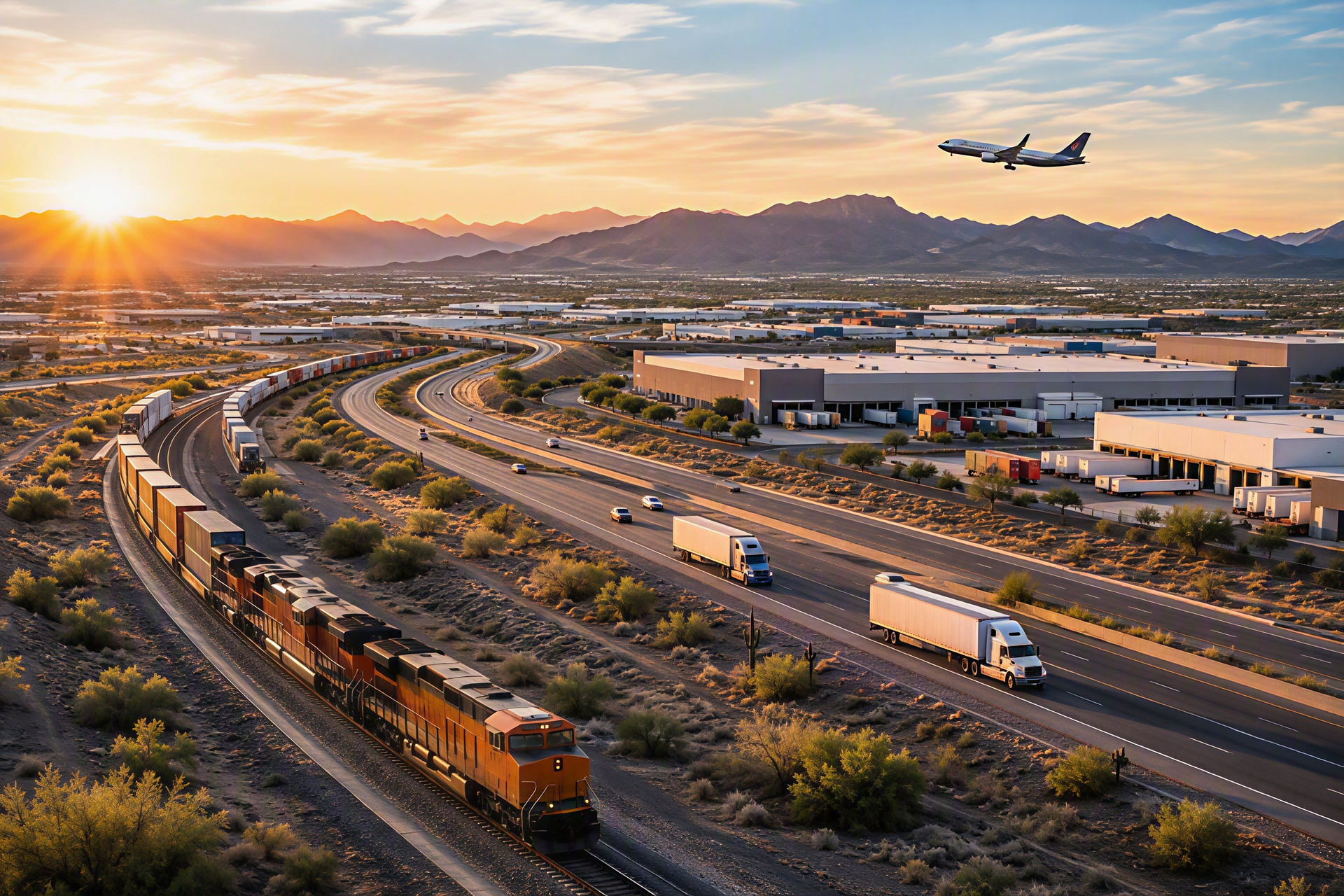
Major warehouse investments, Loop 303 growth and BNSF's planned rail complex are strengthening the West Valley's position as a Southwest logistics crossroads.
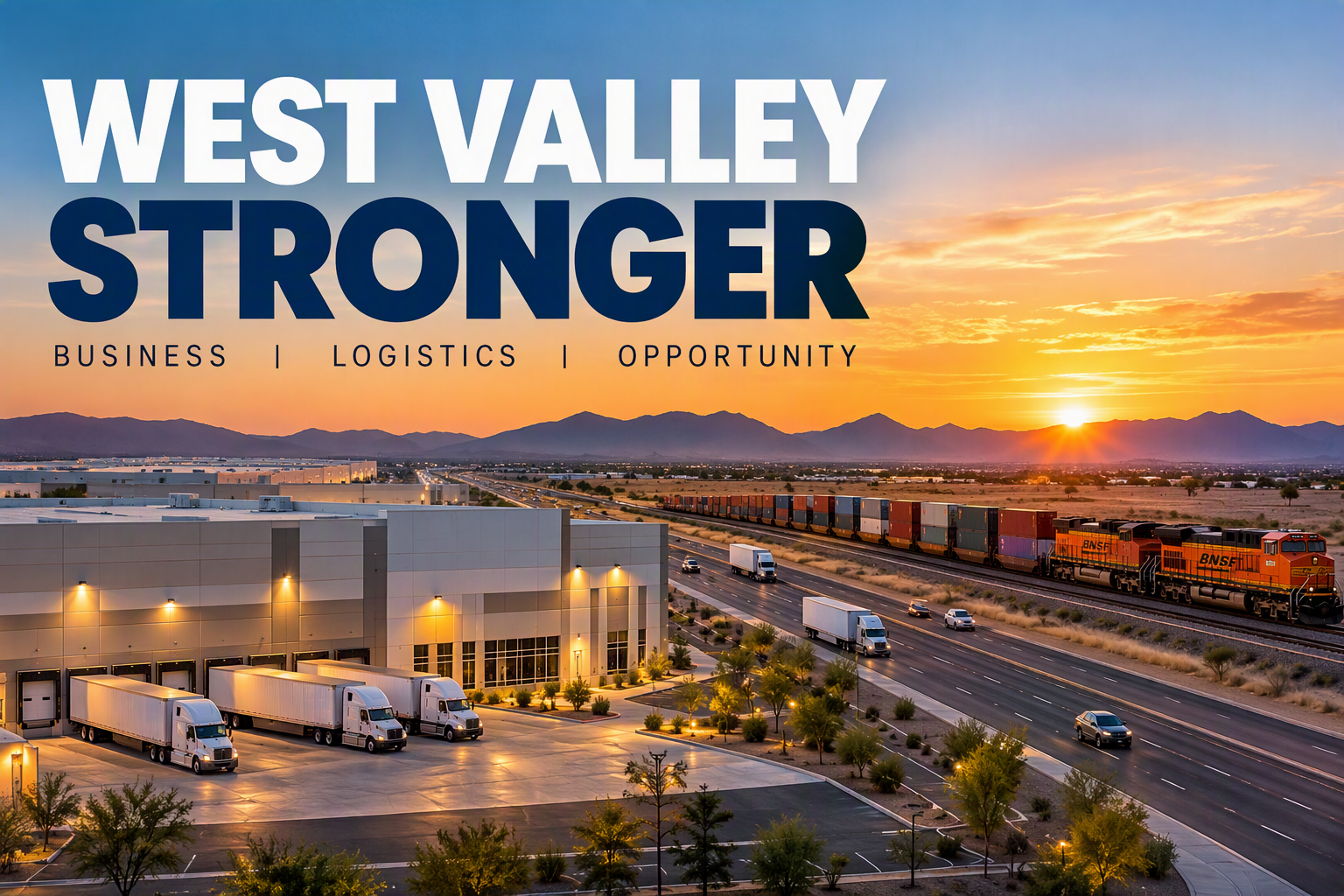
The West Valley Is Becoming a Logistics Crossroads
From major distribution centers to new rail infrastructure, hundreds of millions of dollars in investment are revealing the West Valley’s growing transportation advantage.
Something bigger than warehouse development is happening in the West Valley.
Discount Tire recently purchased a nearly 290,000-square-foot warehouse near Loop 101 and Indian School Road for $64.5 million, with plans to use the property as a distribution facility.
On its own, that's a significant investment.
But it isn't happening on its own.
Walmart purchased a 1.28-million-square-foot Glendale warehouse for $152 million. Dollar Tree acquired a 1.25-million-square-foot Glendale warehouse for $147 million.
Those three companies alone have invested approximately $364 million in nearly 2.8 million square feet of West Valley distribution space.
Institutional investors are putting substantial money into the region as well. LaSalle Investment Management recently acquired an approximately 734,000-square-foot building at 303 Crossroads for $109.5 million. The property is leased to Scotts Miracle-Gro. LaSalle previously acquired another building in the development, leased to Puma, for $140.2 million.
These announcements may appear to be separate real estate transactions.
Taken together, they tell a much bigger story.
Location Is Becoming a Competitive Advantage
For decades, West Valley economic development has benefited from available land and rapid population growth.
Increasingly, another advantage is becoming just as important: location.
I-10 connects Arizona directly with Southern California and markets to the east. Loop 303 has opened enormous areas of the West Valley to industrial and commercial development. SR 85 adds another important connection.
For companies moving millions of products every year, those connections matter.
A distribution center only works if trucks and products can move efficiently. Manufacturers need reliable access to suppliers and customers. Retailers need distribution networks positioned to serve increasingly large markets.
The West Valley is increasingly checking those boxes.
“What we're seeing isn't simply a warehouse boom. Major companies are making long-term investments because the West Valley's location and transportation connections make economic sense. Roads, rail and aviation aren't separate issues anymore. Together, they're becoming part of our competitive advantage.”
Raoul Sada, President & CEO, Northwest Valley Regional Chamber of Commerce
Now Add Rail
Another important piece of the transportation network is taking shape northwest of the Valley.
BNSF is moving forward with development near Wittmann. The broader Logistics Park Phoenix vision encompasses approximately 4,320 acres and includes an intermodal terminal, logistics center and related development.
The initial intermodal development could eventually create another important connection between rail, highways, warehouses and distribution facilities in the Northwest Valley.
That could become particularly important because of the West Valley's position relative to Southern California, one of the nation's principal gateways for international trade.
BNSF is also developing its Barstow International Gateway in California, designed to move international freight arriving through Southern California ports more efficiently into its national rail network.
That doesn't mean Discount Tire, Walmart or Dollar Tree chose their West Valley locations because of BNSF. We shouldn't make a connection those companies haven't made.
But it does mean another potentially significant transportation asset is developing alongside an already strong logistics and distribution market.
The Warehouses Aren't Really the Story
Drive along parts of the West Valley and it's easy to see the enormous buildings going up and conclude that the story is simply about warehouses.
It isn't.
The bigger story is the supply chain developing around them.
Major distribution operations create demand for transportation, construction, equipment, maintenance, technology, security and professional services. They also support manufacturers, retailers and other businesses that depend on moving products quickly and reliably.
And the nature of these facilities is changing.
Walmart's new 100,000-square-foot central-fill pharmacy facility in Litchfield Park, for example, is expected to create more than 250 jobs while using robotics for tasks including counting, labeling and sorting prescriptions.
This is increasingly a combination of logistics, technology, automation and transportation.
That creates another challenge for the West Valley: developing a workforce capable of supporting it.
Growth Also Creates Challenges
We shouldn't celebrate investment without recognizing what comes with it.
Rapid industrial and logistics growth can put additional pressure on highways, local roads and interchanges. It brings more truck traffic. It increases demands on infrastructure and creates competition for employees, land, power and other resources.
Those aren't arguments against growth.
They're arguments for planning ahead of growth.
The West Valley's transportation system needs to evolve alongside its economy.
That's one reason the Chamber has advocated for a broader approach to Arizona transportation built around a straightforward principle:
Roads. Rail. Aviation. Arizona needs all three.
Transportation isn't simply about getting from Point A to Point B.
Transportation is economic infrastructure.
It influences where businesses invest, how much it costs to move products, whether manufacturers can compete and ultimately where jobs are created.
A Strategic Advantage We Can't Take for Granted
The West Valley has long talked about its strategic location.
Now companies are putting real money behind it.
Hundreds of millions of dollars are flowing into distribution centers and industrial properties. Major companies are establishing significant operations.
The Loop 303 industrial corridor continues developing. And BNSF's rail investment could add another important piece to the region's transportation infrastructure.
The individual announcements matter.
But the pattern matters more.
The West Valley isn't simply becoming a place with more warehouses.
It's becoming one of the Southwest's emerging logistics and distribution crossroads.
Our challenge now is ensuring that our roads, rail, aviation, workforce and public infrastructure are ready for what comes next.
Because strategic location by itself isn't enough.
We have to turn that location into a lasting competitive advantage.