BNSF Moves Forward as Arizona Embraces a Broader Transportation Vision
Arizona Chambers Adopt a More Complete Transportation Vision
BNSF Moves Forward as Arizona Embraces a Broader Transportation Vision
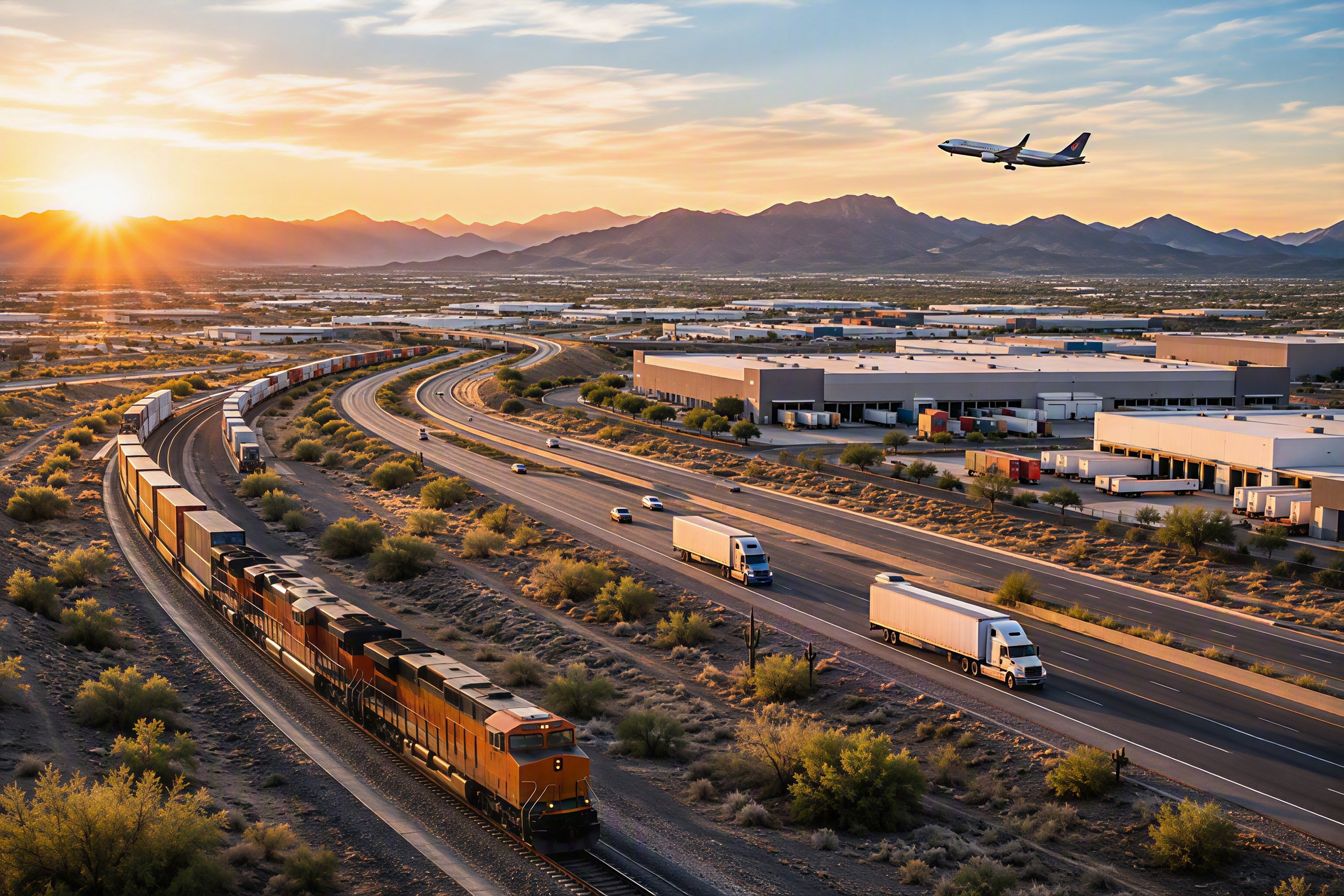
Construction near Wittmann highlights why Arizona’s future transportation system must include roads, rail and aviation.
Arizona’s transportation conversations have traditionally focused on roads, highways and traffic congestion.
Those investments remain critical. But Arizona’s growing economy depends on a larger, interconnected transportation system that moves both people and products.
That means roads. It means aviation. And increasingly, it means freight rail.
That broader transportation vision is becoming more visible in the Northwest Valley, where BNSF Railway has begun construction on an approximately 350-acre intermodal facility near Wittmann.
The facility is part of BNSF’s broader Logistics Park Phoenix vision, a proposed $3.2 billion development encompassing approximately 4,320 acres. Construction on the initial intermodal portion is moving forward even as questions surrounding the larger development continue.
For the Northwest Valley Regional Chamber of Commerce, this is about more than one project.
It is about the infrastructure Arizona will need to compete, attract investment and support economic growth for decades to come.
We Started the Conversation Before Construction Began
Long before construction reached this point, the Chamber was examining what a major freight rail investment could mean for the Northwest Valley and Arizona.
Through our Chamber Chat series, we hosted a discussion focused on the economic impact of the proposed BNSF project and the role freight rail could play in Arizona’s future.
That conversation helped put the project into a larger context: jobs and investment, supply chains, freight capacity, transportation infrastructure and the region’s long-term competitiveness.
Watch the Chamber Chat YouTube episode on the BNSF project (Facebook Real)
The importance of that conversation has only increased as the project has moved from proposal and public debate to actual construction.
From One Project to a Statewide Conversation
The Chamber’s involvement did not stop with Chamber Chat.
As debate over Logistics Park Phoenix grew, the Northwest Valley Chamber helped bring Arizona business organizations together to better understand the project and the importance of freight infrastructure.
Chambers from across Arizona ultimately joined together in support of the project.
But the discussion also exposed a larger question:
Why do we so often define transportation infrastructure primarily in terms of roads and highways?
Arizona businesses depend on transportation systems that work together.
Products travel by rail and truck. Manufacturers depend on reliable freight networks. Distribution companies consider transportation access when choosing where to invest. Airports connect Arizona businesses to national and international markets.
Roads, rail and aviation are not separate economic systems. They are parts of one transportation network.
Arizona Chambers Broaden the Transportation Vision
That realization helped produce a broader policy conversation.
In 2026, the Northwest Valley Chamber recommended that the Arizona Chamber Executives legislative agenda explicitly recognize rail and aviation infrastructure alongside traditional roadway infrastructure.
The recommendation went through the ACE review process and was adopted.
The wording change might appear small, but the principle behind it is significant.
Arizona should not think about roads, rail and aviation in isolation. Arizona needs a comprehensive transportation strategy.
As I wrote when the ACE policy change was adopted:
“The lesson wasn't about one project. The lesson was that Arizona's future depends on an integrated transportation system. Roads matter. Rail matters. Aviation matters. Together, they help connect businesses, workers, communities, and opportunity.”
Raoul Sada, President & CEO
Northwest Valley Regional Chamber of Commerce
The progress now occurring at BNSF provides a real-world example of why that broader transportation vision matters.
From Discussion to Construction
The BNSF project is no longer simply a proposal.
Construction is underway.
Work began earlier this year on approximately 350 acres near BNSF’s existing rail line and U.S. 60. BNSF has said this initial facility can proceed under existing rights and permits.
Current project information indicates the first-phase intermodal facility is expected to begin operations in early 2027.
BNSF has also said additional freight capacity is needed because its existing Glendale intermodal facility is nearing capacity and cannot be expanded further.
That makes an important point.
Transportation infrastructure isn't only about preparing for future growth. It is also about responding to growth that has already arrived.
Why Rail Matters to Arizona Businesses
Most Arizona businesses will never load a shipping container onto a train.
But nearly every business depends on the supply chain.
The products on store shelves, materials used by manufacturers, equipment used by contractors and goods delivered to consumers all depend on an efficient transportation network.
Strategic freight infrastructure can strengthen those supply chains while improving Arizona’s ability to compete for manufacturing, distribution, logistics and other business investment.
That is why the Chamber believes rail belongs alongside roads and aviation when Arizona discusses economic infrastructure.
Growth With a Voice
Supporting strategic infrastructure does not mean ignoring legitimate community concerns.
Traffic, roads, public safety, noise, land use and quality of life deserve serious consideration.
Those concerns have been part of the discussion from the beginning. The Chamber believes economic growth and quality of life can be compatible goals.
Good development requires investment, planning, community participation and collaboration.
Looking Ahead
The larger Logistics Park Phoenix project still faces important land-use and community questions, even as the initial intermodal facility moves forward.
But the broader lesson is becoming increasingly clear:
Arizona is growing. Our infrastructure must grow with it. And our definition of infrastructure must grow as well.
What began as a conversation about a major rail project helped spark a broader discussion about how Arizona defines transportation infrastructure.
That discussion helped bring Chambers together.
It helped elevate freight rail as an economic-development issue.
And it contributed to a statewide Chamber agenda that now recognizes something increasingly important to Arizona’s future:
Roads matter. Rail matters. Aviation matters.
Together, they form the transportation network Arizona will need to remain competitive for the next generation.